

Bathurst 1987 is a watershed event for Australia’s premier motor race as it welcomed the World Touring Car Championship to our Mountain, but there were a few missing internationals unaccounted for.
The inaugural running of the World Touring Car Championship aimed to bring the strongest drivers and teams in a global competition, with the timing perfect after excellent competition in 1986.
Ford, BMW, Rover, Volvo and Holden were evenly matched in the outright battle for the International Touring Car Championship (the rebranded ETCC) alongside class entries from Toyota, Mercedes-Benz, Volkswagen and Alfa Romeo.
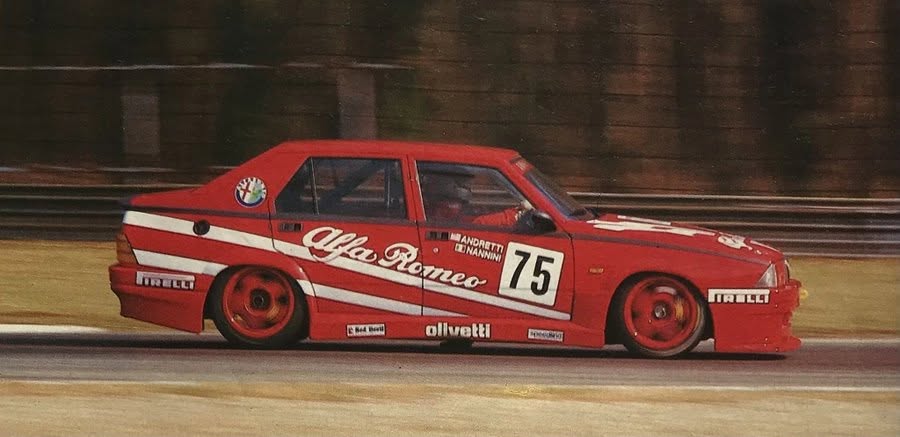
That last manufacturer is interesting, Alfa Romeo introduced its 75 model to spearhead its touring car hopes in V6 form initially before progressing to the turbocharged Evo version ahead of the World Touring Car Championship.
Controversy was never far away from the WTCC including the displacement of founding promoters Strathmore Group for Formula 1 supremo Bernie Eccelstone before the season had even started.
Joining Alfa Romeo in the outright battle were Ford, BMW, Maserati and Alfa Romeo, while Holden appeared a various races although its motorsport world was turned upside down at the start of the season when it split with Peter Brock.
This halted Brock’s planned assault on the WTCC and Tom Walkinshaw took on Holden’s factory operations, but this didn’t amount to much in 1987.
Volvo also pulled out due to the controversies of the previous year and Rover was gone too, leaving Walkinshaw to be snapped up by Holden.
Alfa Romeo was quietly confident of solid performances in the WTCC, which lost further entries due to a hefty $60,000 entry fee and the Italian manufacturer enjoyed weight in numbers.
Brixia Corse, Albatech, Q-Racing and Alfa Corse all entered multiple entries featuring drivers such as Alessandro Nannini, Jacques Laffite, Paolo Barilla, Jean-Louis Schlesser, Giorgio Francia, Gabriele Tarquini, Claudio Langes, Nicola Larini, Thomas Lindström, and even Michael Andretti appeared at the opening round at Monza.
Despite entering the season with confidence, the onslaught of BMW’s M3 and the heavily revised Ford Sierra Cosworth, which was upgraded to RS500 specifications halfway through the season resulted in the Alfa Romeo being seriously outgunned.
By the time the European segment of the season was complete, Alfa Romeo was out and failed to complete the flyaway events in Australia, New Zealand and Japan.
Having originally entered six 75s for Bathurst, Alfa Romeo pulled the pin on its Bathurst attack two weeks before the race.
This left Colin Bond as the sole outright contender for Alfa Romeo at Bathurst, but this ended in disastrous circumstances when co-driver Lucio Cesario crashed at The Esses to cause the first safety car in Bathurst 1000 history.
Loyal privateers were pleased by the absence of Alfa Romeo as it allowed their entries to race following doubts surrounding this happening during the lead up.
Alfa Romeo failed to return to the international stage until the mid-1990s as the 75 failed to meet the expectations of being a world beater.