
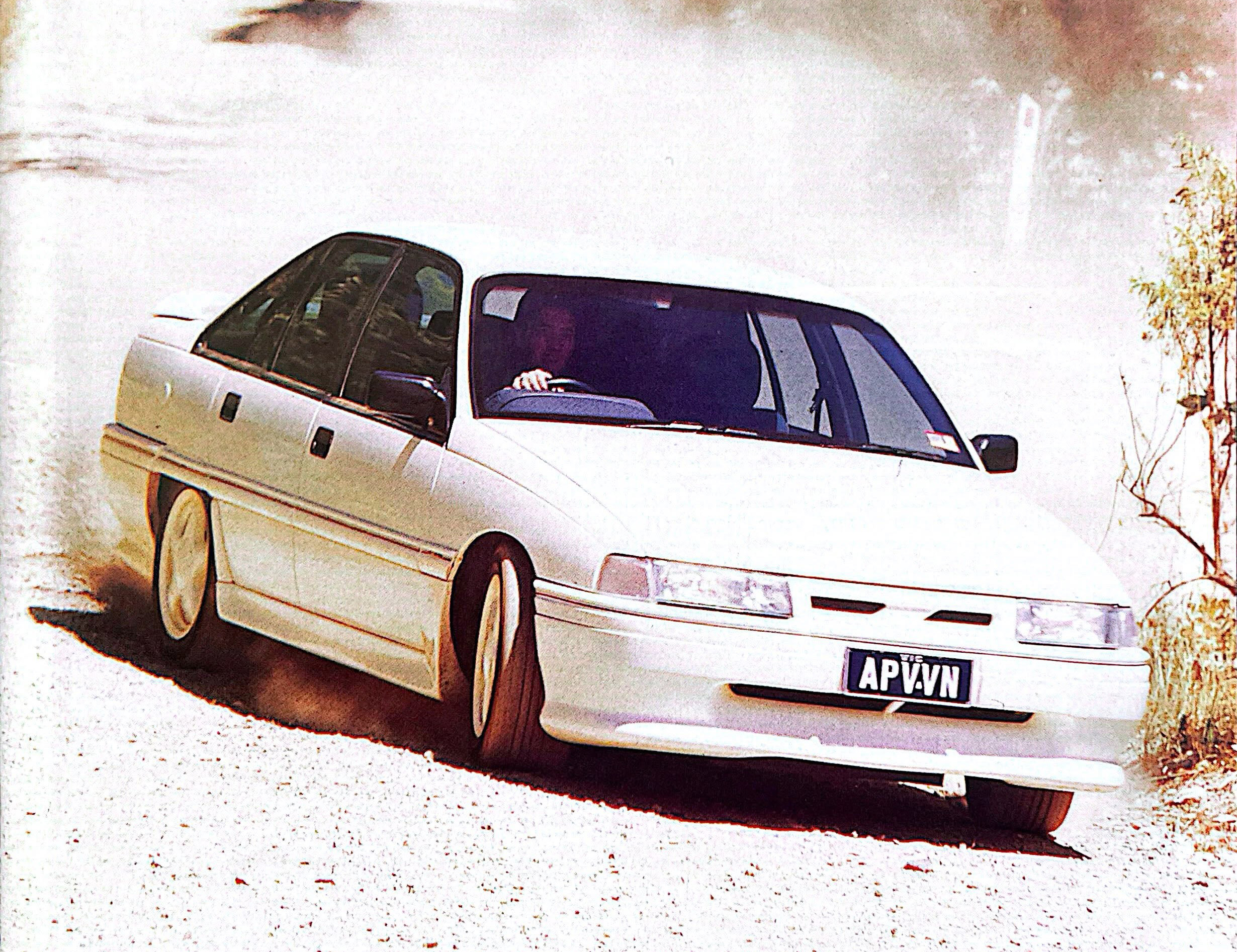
When Holden severed ties with its star driver Peter Brock on the eve of the 1987 season due in part to the infamous Polarizer, there was a company born from the ashes of the former HDT.
Formed by four former Holden Dealer Team directors, APV Special Vehicles replicated Brock’s successful business model of modifying Holdens for the road-going market, which soon expanded into Ford Falcons and even, surprisingly Toyota Lexcens.
APV Special Vehicles was formed by Jeff Hughes, Neville Page, Rob Payne and Ray Riach where it was set up in the Melbourne suburb of Bayswater.
The quartet had tendered to replace Brock as Holden’s one-stop shop, but this ended up going the way of British racer and businessman Tom Walkinshaw.
Walkinshaw’s Holden Special Vehicles organisation endured a rough start to its journey due to the final 200 VL Commodore Group A SS being heavily discounted and the Astra SV not being well received.
To protect his investment, Walkinshaw ensured a letter was sent out to Holden dealers reminding them by selling non-approved modified models or risk losing their franchise.
APV had an enviable line-up of designers, fabricators and assembly workers all experts in the Holden product, but the manufacturer was trying to protect its investment.
Early APV offerings were lightly modified using genuine Holden parts including S-pack tail lights, springs and front sports seats.
The biggest development on the APV models were the unique ROH alloy wheels, while engine modifications did not occur until outside of the warranty period. A body kit and subtle badging completed the modifications.
At $43,000, the HSV equivalent was more than $10,000 more expensive.
Walkinshaw’s wanted monopoly on the Holden market led APV to expand into Ford by introducing the Falcon SR3900 (a parody name of HSV’s SV3800) featuring a lot of back-door support from frustrated workers at the Blue Oval’s factories.
In its first 12 months of operation, APV assembled 210 new units and modified a further 300 for customers.
It is believed APV also modified the Commodore-based Toyota Lexcen also during the model-sharing era of Australia’s manufacturing history.
Not much is known regarding how long the company was completing these modifications except that it appears nothing past a VN or VP was completed.
APV modified models are rare, but do pop up on the occasion.