

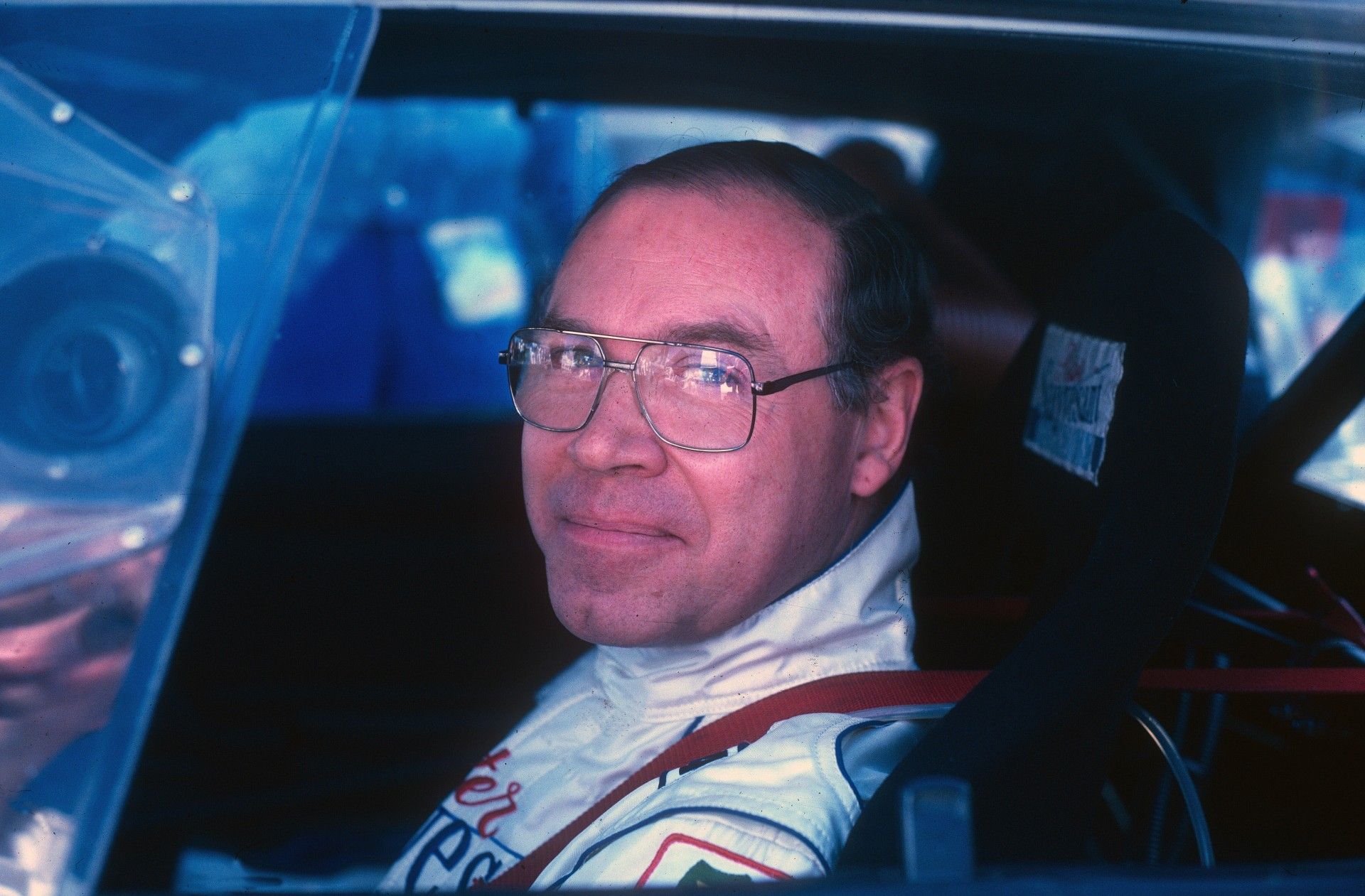
Racing legend Allan Moffat has passed away aged 86 following a long battle with Alzheimer’s disease.
Canadian-born, Moffat first hit Australian shores in his late teens due to his father’s job at Massey-Ferguson.
This is when a 17-year-old Moffat first competed in motorsport and entered the 1964 Sandown 6 Hour International to finish fourth partnered by John Leighton.
Making his Australian Touring Car Championship debut at Sandown in 1965 driving a Lotus Cortina, Moffat soon ventured to the United States where he enjoyed limited success in the Trans-Am Series.
Moffat scored a stunning outright victory in his Under 2-Litre Cortina to form a solid relationship with Ford, which proved invaluable in the future.
Racing Ford Mustangs for Carroll Shelby and Mercury Cougars for Bud Moore Engineering, Moffat then returned to Australia in 1969 where he became the first professional driver focused on motorsport.
Bringing along a one of seven Ford Mustang Boss Trans Am built by Kar Kraft to compete against the local stars led by Ian ’Pete’ Geoghegan, Norm Beechey and Bob Jane, Moffat received sponsorship from Coca-Cola.
Using his Ford relationship in gaining access to the Boss did Moffat and it proved a success almost immediately.
Moffat ran the Mustang for six seasons to 1975, winning on 78 occasions as he just failed to win the championship.
A Bathurst debut came in 1969 as Moffat debuted in the same year as Peter Brock for the newly formed Holden Dealer Team led by former Ford team manager Harry Firth.
Moffat vs Brock, Ford vs Holden was the battle of the 1970s. Moffat was the dark knight, the serious, focused driver leading the Blue Oval camp during a turbulent time of factory support with it dropping in and out continuously.
Overseas opportunities did come Moffat’s way including victory at the 12 Hours of Sebring in 1975, while he did make two starts at Le Mans for a best of sixth in 1982 driving a Mazda and four starts in the 24 Hours of Daytona.
Despite this, he won Bathurst in 1970, 1971, 1973 and the famous 1-2 of 1977, while added Australian Touring Car Championships in 1973, 1976, 1977 and 1983 after partnering with Mazda.
Ford’s lack of support forced Moffat to align with Mazda amid some controversy due to CAMS believing the RX-7 was a sports car.
It was allowed to run in 1982 and soon became a force until Group A ended the partnership due to Mazda not having an option for the new regulations.
Moffat’s next move was viewed as joining the enemy when he linked up with Brock at the Holden Dealer Team. Moffat had already contested at least two races previously in Holdens, one of which was for the factory team in 1980.
Part of this new era involved a fact-finding mission to Europe as Brock was focused on a World Touring Car Championship tilt for 1987.
The plan failed to occur when Brock fell out with Holden in 1987 and Moffat moved on to running his own team, though did have a success in a Holden when he won the opening round of the World Touring Car Championship at Monza driving a new VL with John Harvey. The pair later finished fourth outright in the same Commodore at the 24 Hours of Spa after winning the King’s Cup the previous year with HDT.
Andy Rouse, then Ruedi Eggenberger Ford Sierra RS500 Cosworths failed to provide another Bathurst win, but gave Moffat the perfect retirement by winning the Fuji 500 on his 50th birthday.
Moffat continued to enter a team in the Bathurst 1000 up until 1996, but he was well ensconced in the Seven commentary box by then.
He provided special comments during the rise of the V8 formula in the early-1990s.
Gaining Australian citizenship in 2004, Moffat went public with his diagnosis with his Alzheimer’s disease and has since lended his profile to promote awareness as a patron for Dementia Australia.
Moffat can also count the appointment of the Order of the British Empire (OBE) in addition to induction to both the Supercars and Australian Sports Hall of Fames.
Condolences to the Moffat family including sons Andrew and James.
Below, check out the documentary covering Moffat’s 1988 Bathurst campaign, which was one the great driver thought got away.